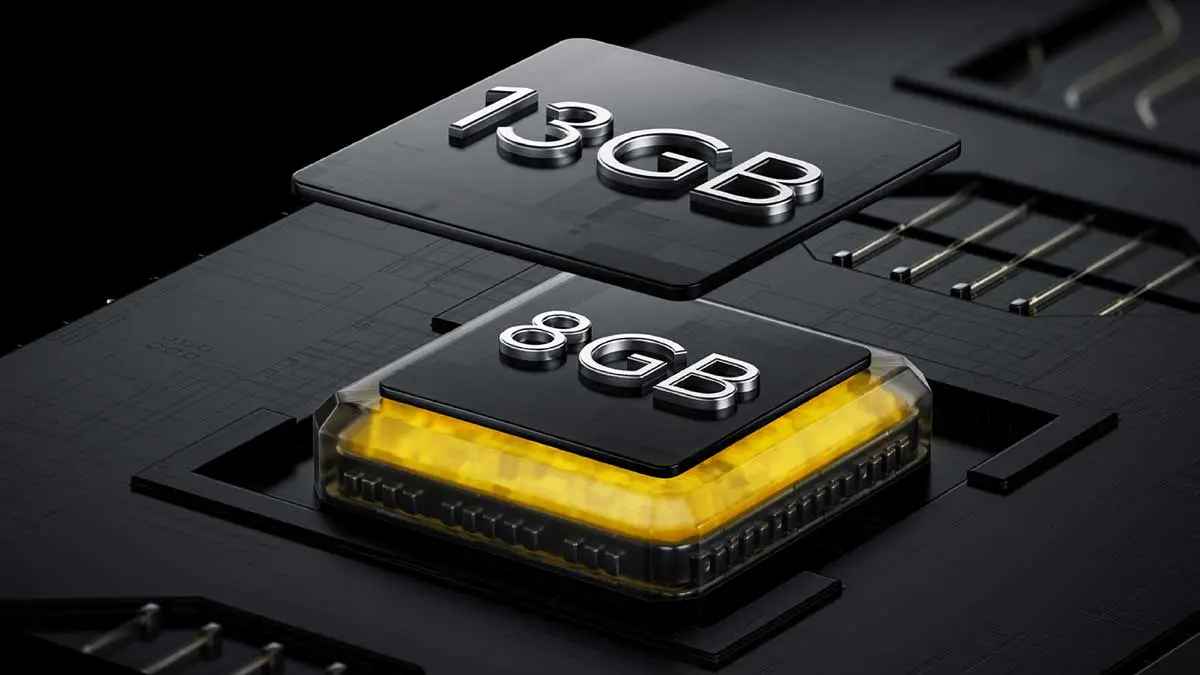
Does AI Make RAM on Smartphones Swell?
Do you still remember the days when having a cellphone with 8GB RAM felt like holding a supercomputer in the palm of your hand? The era where you can open Genshin Impact, just open the fesnuk, then go back to the game without having to worry about being force closed? It feels really beautiful.
If you pay attention to the latest smartphone lines, there is a strange trend that is starting to mushroom. HP manufacturers are increasingly raising their RAM standards to numbers that were previously only available in gaming laptops: 12GB, 16GB, some even dare to reach 24GB! The question is, for what? Are today’s Android games so heavy that they require so much memory?
Even though it’s not the game’s fault, it’s the technology that is being glorified by technology leaders today, namely Artificial Intelligence, aka AI. How come?
The presence of AI makes the RAM on your smartphone swell?
In the past, when smart features like voice assistants or photo filters first came out, our smartphones didn’t actually work that hard. Our cellphone is only tasked with sending commands to the cloud server, then the server processes them and sends the results back to the cellphone screen. This process feels practical, but at the same time it produces fatal weaknesses such as being slow if the internet is bad, and the privacy of your data is at stake.
Now brands no longer use this method, but instead use AI models that are embedded directly on-device, such as the Gemini Nano for example. In practice, all artificial intelligence processes, from summarizing articles, editing instant photos, deleting people in the background, to generating text images, are all processed directly by the chipset and memory in your cellphone without the need for an internet quota.
To run AI directly on the device, your smartphone must contain something called a Large Language Model (LLM). This LLM is like an encrypted mini brain that must always be ready in the smartphone memory. The problem is, this mini brain is not small at all.
Even the most basic intelligent AI models require a huge amount of RAM space to be able to respond to commands in a matter of seconds. As an illustration, the Gemini feature from Google or advanced AI features from other brands requires memory that is always “booked” in the background. The remaining unused RAM is divided into the Android operating system, social media applications and of course your favorite games.
This phenomenon of course triggered mass panic among smartphone manufacturers. On the one hand, they have to sell AI features in order to look contemporary and not be out of date compared to competitors. On the other hand, increasing RAM capacity to 12GB or 16GB en masse across all product lines is not an easy matter.
The AI Domino Effect and the Global RAM Crisis

Demand for memory chip (DRAM) components has increased drastically globally because all industries, including the PC and server industry, also need the same components for their AI. This domino effect of memory shortages and price inflation has given rise to quite intriguing predictions from technology observers: the smartphone market is threatened with extreme polarization.
There are rumors that in order to reduce prices so they don’t explode, manufacturers are forced to cut the specifications of their cheap cellphone variants back to 4GB or 6GB RAM which is clean of AI features. Meanwhile, 12GB RAM and above will be a priority for the flagship class or high-end midrange, the price of which will certainly not be in the pockets of most people.
This situation is actually bad for gamers. Just imagine, we buy a cellphone with high specifications, the goal is to get a stable frame rate, responsive screen, and fantastic gaming performance. Most of us don’t really care about AI’s ability to remove anything from images, or summarize text or videos.
However, because the industry insists that “Good HP = AI HP”, we inevitably have to pay a high price for large RAM capacity, part of which is actually eaten up by features that we rarely use. It’s like we’re being forced to buy jumbo food packages even though we only need rice and chicken.
This condition is exacerbated by the fact⅜ that Android game optimization is sometimes still neglected. Instead of getting more RAM to accommodate asset game which is getting bigger, the space for our RAM is actually being taken over by super protective AI background processes. As soon as the system detects that RAM consumption is approaching the limit, the game we are playing can immediately be closed unilaterally by the system to maintain the stability of the smart AI.
Conclusion

Looking at the current direction of the industry, the increase in RAM standards due to AI invasion is something that is absolute and cannot be avoided. AI has become part of the fabric of our social life. What do you think? Do you agree that AI is the main factor that causes RAM requirements to continue to increase?
Get cool information on Gamebrott related to Tech or similar articles that are no less exciting from Andi. For further information and other questions, you can contact us via author@gamebrott.com.
PakarPBN
A Private Blog Network (PBN) is a collection of websites that are controlled by a single individual or organization and used primarily to build backlinks to a “money site” in order to influence its ranking in search engines such as Google. The core idea behind a PBN is based on the importance of backlinks in Google’s ranking algorithm. Since Google views backlinks as signals of authority and trust, some website owners attempt to artificially create these signals through a controlled network of sites.
In a typical PBN setup, the owner acquires expired or aged domains that already have existing authority, backlinks, and history. These domains are rebuilt with new content and hosted separately, often using different IP addresses, hosting providers, themes, and ownership details to make them appear unrelated. Within the content published on these sites, links are strategically placed that point to the main website the owner wants to rank higher. By doing this, the owner attempts to pass link equity (also known as “link juice”) from the PBN sites to the target website.
The purpose of a PBN is to give the impression that the target website is naturally earning links from multiple independent sources. If done effectively, this can temporarily improve keyword rankings, increase organic visibility, and drive more traffic from search results.